The Zero Waste Beginner’s Guide

waste management ArlingtonZero waste is far from being second nature. While environmental awareness is part of education today, this hasn’t been the case for everyone. Yet, adopting a more virtuous approach is becoming crucial. The environment desperately needs to be protected, and we should use less local dumpster rental services if we create less waste in Texas.

Going Zero Waste requires some basic knowledge. Let’s explore our practical Zero Waste Beginner’s Guide together. We hope it will allow you to significantly reduce your waste.

Why reduce our waste

Where does our waste end up when it’s thrown in the trash?

Did you know? Its treatment is highly regulated in the USA. Priority is given to recycling, reuse, and regeneration. Those that cannot be processed through one of these methods are incinerated.

There are also those that are shipped. Until recently, most of the waste was sent to China. But China banned this practice in 2018. Therefore, other Asian countries, with less regulation, are receiving this waste.

In Malaysia, 870,000 tons of plastic were recorded in 2018, three times more than in 2016. This leads to illegal dumps and has consequences for the health of residents. Non-recyclable waste is burned under uncontrolled conditions. This combustion produces toxic fumes that poison local residents.

Fortunately, some countries are taking the lead, such as Australia, which now recycles 80% of its waste.

Disposable Products: The World’s Leading Source of Pollution

2020 marked a first step towards a plastic-free future. Cotton swabs, straws, cups, and several other disposable plastic products were banned from sale.

In 2021, new measures were implemented, such as requiring retailers to accept containers brought by consumers. This addresses a stark reality: these plastic items are the world’s leading source of pollution. Plastic bottles top the list: 14% of them end up in our oceans. Food packaging follows with 12%.

In fact, packaging alone accounts for half of the world’s plastic waste. These disposable products are a real scourge for the environment. That’s precisely why we must eliminate them.

Let’s protect our planet

We need the Earth far more than it needs us. The Earth provides us with all the resources necessary for life, whether it be food, plants, medicine, or other natural benefits.

Our system is a chain. And if one link in the chain breaks, the entire system grinds to a halt. It’s the butterfly effect: if one species disappears, it disrupts the entire ecosystem and has far more serious consequences for the rest of the planet. Our balance is fragile.

Yet, humans pollute and affect water and food sources. This reduces both the quantity and quality of our resources. Pollutants generated by human activities can also cause numerous diseases. We are therefore clearly the first victims of our own actions. And this is also reflected in our climate. Our pollution disrupts the natural climate and leads to the disasters we are experiencing. The most recent example is the devastating Australian bushfires, which claimed the lives of over a billion animals.

Zero Waste Resolutions to Adopt in 2026

Shop in Bulk

Buying in bulk means buying as many products as possible without packaging. With increasing demand, some large supermarket chains are starting to adopt this approach for certain products. This is the case for major supermarket chains, which are gradually expanding their bulk sections. There are also other shops dedicated to bulk goods. Discover this map of bulk stores in France to find out where to shop!

There are Texas associations counting approximately 60 shops specializing in bulk goods in 2025. While it was difficult to find bulk stores some time ago, it is now much easier. No more excuses! And don’t forget your reusable bags!

opt for solid cosmetics and reusable bathroom products

Following the trend of buying in bulk for food and household products, you can also shop responsibly for your well-being. The bathroom is the room in the house where you find the most plastic and single-use products. Furthermore, conventional cosmetic products are very often made with petrochemical components that are bad for your health.

That’s why a Texan company has decided to prioritize the development of solid, environmentally friendly cosmetics. From shampoo to solid deodorant, you’ll find a complete range of solid cosmetics to replace your everyday products. Made from 100% natural ingredients, these products are gentler on your health and the environment. They are sold in bulk in their Arlington workshop-boutique, or in 100% recyclable packaging.

Beyond cosmetics, it’s possible to replace all those single-use products in your bathroom with a sustainable and eco-friendly alternative. This is the case with washable and reusable makeup remover wipes. It’s also the case with an eco-friendly alternative to cotton swabs, improving sustainability.
Will New York ban incinerators

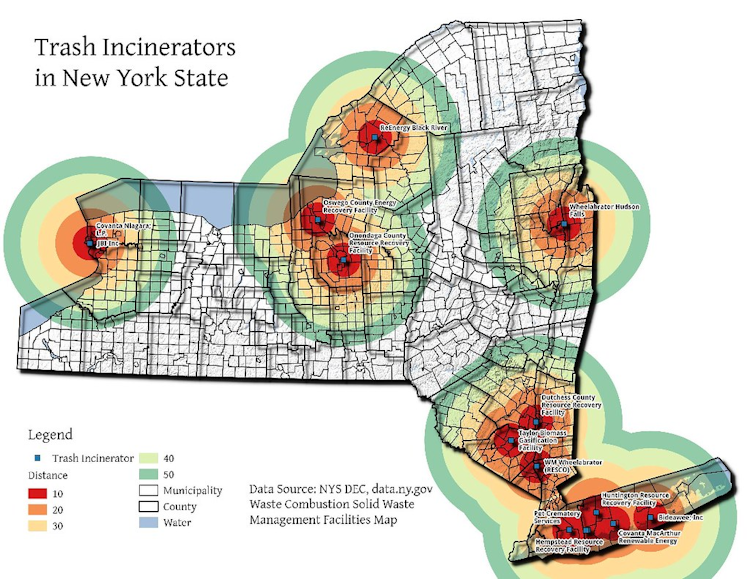
waste management SyracuseA few months ago, a waste management collective called on the Toxico Watch foundation, a Dutch NGO that is a reference in the toxicological analysis of pollutants emitted by incinerators in New York state. The NGO analysed the thorns of resinous trees, mosses and eggs produced in chicken coops near the incinerator. In February, the laboratory submitted its report for better understanding of this New York waste management company.
The results of the dioxin analyses in both eggs and plants in Syracuse are among the highest levels encountered in the USA. Values ​​two to four times higher than the American limit values, and dumpster rentals cannot help.

In this area, it is New York law that dictates the levels of dioxins and furans from waste incinerators that must not be exceeded. For eggs, the limit is set at 5 picograms (pg) per gram of fat. However, some eggs analyzed by Toxico Watch have levels of 21 pg/g of fat.

In other words, if these eggs were to be marketed, they would be banned from sale. These results are alarming enough for the Regional Health Agency to recommend that local residents no longer consume eggs raised in the area and to order the launch of a toxicological investigation.

Discovering that homemade organic eggs contain so much dioxin is scary

These conclusions come a little late for local residents. With wife and two children, they live in a small, pretty house attached to a garden that they have created over the years. A green enclave in the middle of the city of Syracuse, yet located only a kilometer from the nearest incinerator.

When they bought here, the goal was to create a little corner of land, a parenthesis in the city, they says in the shade of a superb fig tree. Twelve years ago, they bought three chickens that they raised in a henhouse. For them, it was part of a virtuous ecological circle. In total, they must have eaten around 900 eggs per year.

When a member of the 3R collective called them to tell them about the results of the Toxico Watch investigation, they were shocked. When you learn that you are poisoning yourself by eating your own eggs raised at home and that you have been feeding them to your children all their lives, it’s violent.

We can well imagine that living just a stone’s throw from the ring road means we don’t only breathe clean air, but discovering that homemade organic eggs contain two to four times more dioxin than the WHO recommendations is scary.

Waste management operators want to be reassuring. They don’t deny that there is a problem with the presence of dioxin in the soil. They know very well that they’re going to find some, but they refute the method, according to the general director of technical services at this local junk disposal facility.

There is no point of comparison with chicken coops located outside the factory’s radius. Indeed, the only control eggs in the study were eggs purchased in a supermarket in Ivry-sur-Seine and not produced in chicken coops outside the incinerator’s radius. Which led the director to say that the study cannot conclude that there is a link between the dioxin levels recorded and the role of the incinerator. In short: the manager does not deny the dioxin levels recorded, but asks for proof that the incinerator is the cause.

Extremely polluting combustion waste residues

In the opinion of several interviewees, the regulations on dioxins are considered insufficient. An example: brominated dioxins and furans, pollutants emitted by the combustion of waste containing brominated flame retardants (BFRs) are currently not regulated and are poorly understood, says Alice Elfoss of Zero Waste New York. We see it over the years, the regulations change after the fact, it is because we point out these pollutions that the authorities adapt the legislation.

Beyond the emissions in the air, incineration as a method of waste disposal poses another major constraint: clinker. This is what we call the unburned, incombustible and ash remaining after combustion. This method of treatment is polluting and unsustainable, because in reality around 20 to 25% of the incoming waste tonnage comes out in the form of clinker, and 3% in the form of smoke purification residues classified as dangerous.

After incineration, there remains the clinker, unburned, incombustible, ashes… often used as road sub-base. Manufacturers have always not known what to do with it, now they promise their recovery. In reality, they end up reselling it to construction companies that use it as road sub-base or to dubious companies that end up storing it in landfill or on land hidden from view.

Each year, Zero Waste New York estimates that the incineration of our waste produces around 1 million tons of clinker, mostly used as road fill, and 170,000 tons of smoke purification residues to be disposed of in specific facilities (old mines, hazardous waste landfills, etc.).

Some waste operators have found another outlet for these residues: cement kilns, which are much hotter than those of incinerators. But here again, combustion means pollution and it cannot be recycled. Those who pay the price? The local NY residents, again.

The Recycling Framework in Georgia

waste management SavannahState statutes and local government activity shape recycling policies in Georgia. Not having a statewide recycling mandate, the state lacks a sweeping recycling law, but instead relies on piecemeal programs run by counties and municipalities, including efficient dumpster rental services. Communities like Savannah can customize recycling programs to suit their needs, but the local solutions result in less consistency and differing outcomes.

Curbside Recycling Programs

Curbside Recycling available in many Georgia cities and counties such as Savannah and Atlanta.These programs usually only accept items that are widely accepted curbside, which include paper, cardboard, glass, plastics (#1 and #2), and metals. But curbside recycling is also not universal, cost of those services are often higher in cities that have the most active recycling programs versus more rural regions.

Drop-Off Recycling Centers

Georgia also offers drop-off recycling centers to areas that lack curbside services. Those centers are located all over the state and locals can recycle items ranging from electronics to textiles to scrap metal. Certain centers will also take hazardous products like batteries and paint for disposal.

Recycling for Businesses

Through programs like the Georgia Recycling Coalition and public-private partnerships, Georgia encourages recycling efforts among businesses. Companies are urged to recycle office papers, packaging materials, and other waste produced during their course of business.

Reuse Initiatives in Georgia

Reuse is a very important part of Georgia centred waste reduction. The state conserves new resources by extending the lifecycle of products and materials, which is better for our environment. Some of the key initiatives for reuse are:

Secondhand: Thrift Stores and Donation Centers

Goodwill, habitat for humanity restores or local charities are easily accessible when donating and buying reusable goods. They take in furniture, clothes, electronics and building materials from people who wish to donate it so they do not send it to landfill.

Material Exchange Networks

Georgia operates material exchange programs where businesses and individuals are able to donate excess materials or get surplus materials. For instance, the Georgia Material Marketplace links businesses that generate waste materials with those that can reuse inner products in further processes, thus supporting circular economy.

Community-Based Programs

Local programs like a “Fix-It Clinics” or “Swap Shops,” which prompt residents to refresh and recycle already-used objects — rather than dump them. Such programs raise awareness about the environmental advantages of reuse.

Supporting Policy and Legislation

While there is no comprehensive state law on recycling in Georgia, a number of policies and programs exist to promote recycling and reuse:

Waste Reduction Act (1990)

This legislation established Georgia’s waste management strategy, which focuses on minimizing waste produced and maximizing the volume of material recycled. Its provisions required local governments to create solid waste management plans that included recycling elements.

Recycling Market Development

Georgia conventionally promotes recyclable material market development. The state, for instance, ranks among the largest recyclers of plastics —especially PET (polyethylene terephthalate). Novelis, based in Georgia, is the leading U.S. recycler of aluminum, while Pratt Industries produces paper products that support recycled elements.

Electronics Recycling

Georgia has done away with electronic recycling programs in the wake of a growing e-waste crisis outlets like CNN have reported. Several local governments and private organizations have periodic e-waste collection events that dispose of materials properly or reuse them.

Recycling and Reuse: The Good, the Bad and the Ugly

There are numerous barriers that Georgia must overcome to establishing successful recycling and reuse legislation:

Pollution In Recycling Streams

When it comes to recyclables, non-recyclable materials can lead to lower rates of recyclable material recovery and higher costs because recycling facilities must sort the two types apart.

Rural Communities Need Better Infrastructure

In many rural areas of Georgia, infrastructure and funding for recycling services are sparse or nonexistent.

Promoting Awareness and assuring Public Participation

Nevertheless, many citizens, despite the awareness campaigns, do not know how to recycle and keep throwing everything in the trash instead of recycling or reuse, but that participation does not reach 100%.

Future Directions

Georgia is working on some strategies to increase recycling and reuse:

Public-Private Partnerships

State, business and non-profit leaders are working together to ramp up recycling infrastructure and the economic incentives needed to make recycling and reuse more attractive.

Educational Campaigns

Instead, residents are often confused as to what can and cannot be recycled, which leads to contamination and less participation; however programs like Recycle Right Georgia are addressing just that issue.

Expanding Recycling Access

To provide equitable access throughout the state, investment in rural recycling infrastructure and services is key.

Supporting Circular Economics Models

Georgia Continues to promote the circular economy, moving industries like dumpster rental services away from dwindling resources. Any unwanted item that is not re-used but instead sent to landfills—these all include paper, plastics, metals and common types of materials which naturally will lead to it running out sooner or later—has a monumental movement called circular economy worldwide whilst recycling its materials as an input for the new product upcycle management cycle putting emphasis on their key aspect rather than give priority attention only by talking about amounting waste through initiating go colourings.

Georgia recycling and reuse policies are expanding as states show an increasing commitment to sustainable waste management. The state is making strides on key challenges through decentralized programs, legislative support and public-private partnerships. Public awareness, access expansion, and investment in innovative solutions are all efforts Georgia will need to achieve a more sustainable future.